Wednesday, 21 May 2014
Writing without guilt
This is a happy woman.
I've struggled for years to find time to write my own work. When I've crammed stories and poems into days when other people expected me to be writing copy for them, I felt guilty that I wasn't earning money (or at least probably wasn't - we have to have hope when we write stories that someone might pay to read them). When I wrote in the evenings and weekends I felt guilty that I was ignoring my family.
So I"ve instituted a new thing. On Wednesdays I will write for myself. I'm keeping my diary clear, and I'm being firm with myself and with the people I love. Wednesdays are for me, and I won't spend them cleaning out cupboards or doing the accounts, or soothing anxious brows, or anything except writing or thinking about writing.
Up there, behind the mug, is a woman who's just spent a day thinking and writing, and she feels much better for it.
Sunday, 13 April 2014
Reading cure
It's a myth that when
you're ill, you catch up on all that reading that's been piling up behind the
armchair.
In my book pile there's all
sorts of interesting stuff and I've just had a vile cold for three weeks, but I
couldn't concentrate at all, so I haven't touched the pile.
On the other hand, I did
want to read and I didn't want to read rubbish. I don't lose my critical
faculties when I'm ill - I just want to read stuff that's quite
straightforward, or so short that I've a chance of staying awake till the end.
So here are some books I'd
pick off my shelves for a good friend who's just retreated under their duvet
with a nasty bug.
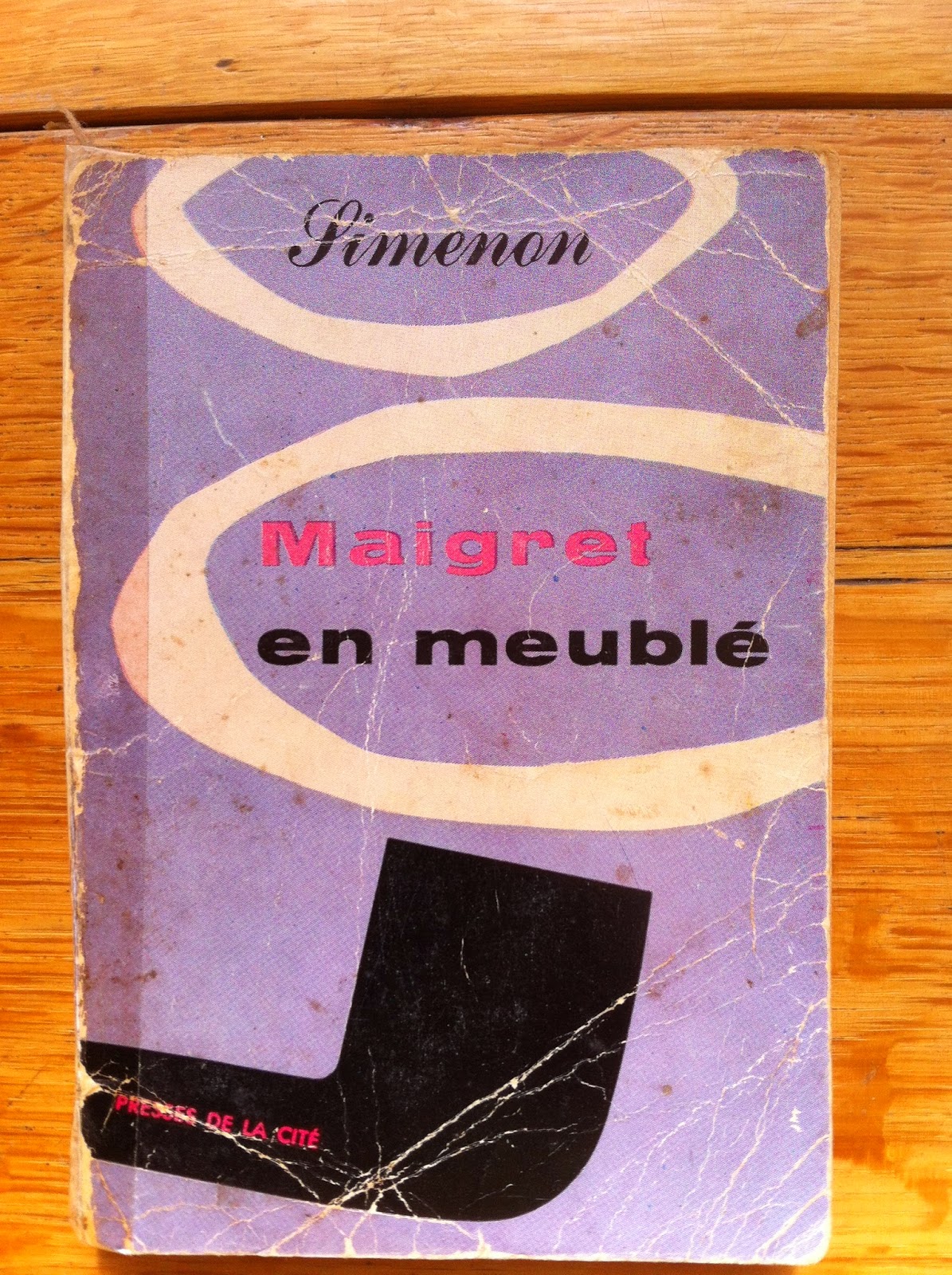
Any Maigret novel by
Simenon. They're entirely
predictable - everyone assumes the obvious culprit did the crime, but Inspector
Maigret sits in bars, watches people, mulls, and then conducts an all-night
interrogation in his office, smoking pipe after pipe. It's wonderfully
soothing.
This is pure comfort
reading - I started reading Maigret when I was at school, and I studied French
at university so I could spend a year drinking in ill-lit Parisian bars like
Maigret. I never made it to Paris, but I still love the novels.
My comedy comfort-reading equivalent to Simenon is a Jeeves and Wooster novel.
I've read them all, and am always happy to tuck myself into one again. It's
like eating a bar of milk chocolate in your pyjamas. Sheer indulgence.
Lydia Davis's short
stories. Short stories are great when you can only stay awake for half an hour, and Lydia Davis's are brilliant - they're hugely varied, though she does have a distinctive deadpan tone, and often surprising. And they're really short, most of them, so you can read one, reread it, and fall asleep thinking about it.
I’ve just reread 'The
Cottages', in which the narrator simply describes two old women she knows, and
in the gaps between the two descriptions lies some kind of revelation. It's
three pages long, and beautiful. Here's the opening:
'She is seventy-nine or so,
and on the one hand it's hard to talk to her (she has come to dinner, it's just
the two of us; she eats much more than I thought an old lady would ...'
Diaries: when I'm not up to doing anything, it's good to live
vicariously and read about what other people have been up to. My ideal diary is
one with a bit of self-deprecation, a dry wit, and a seam of anger. Chris
Mullins is great for this, and in moments of feeling glum, I also go back to
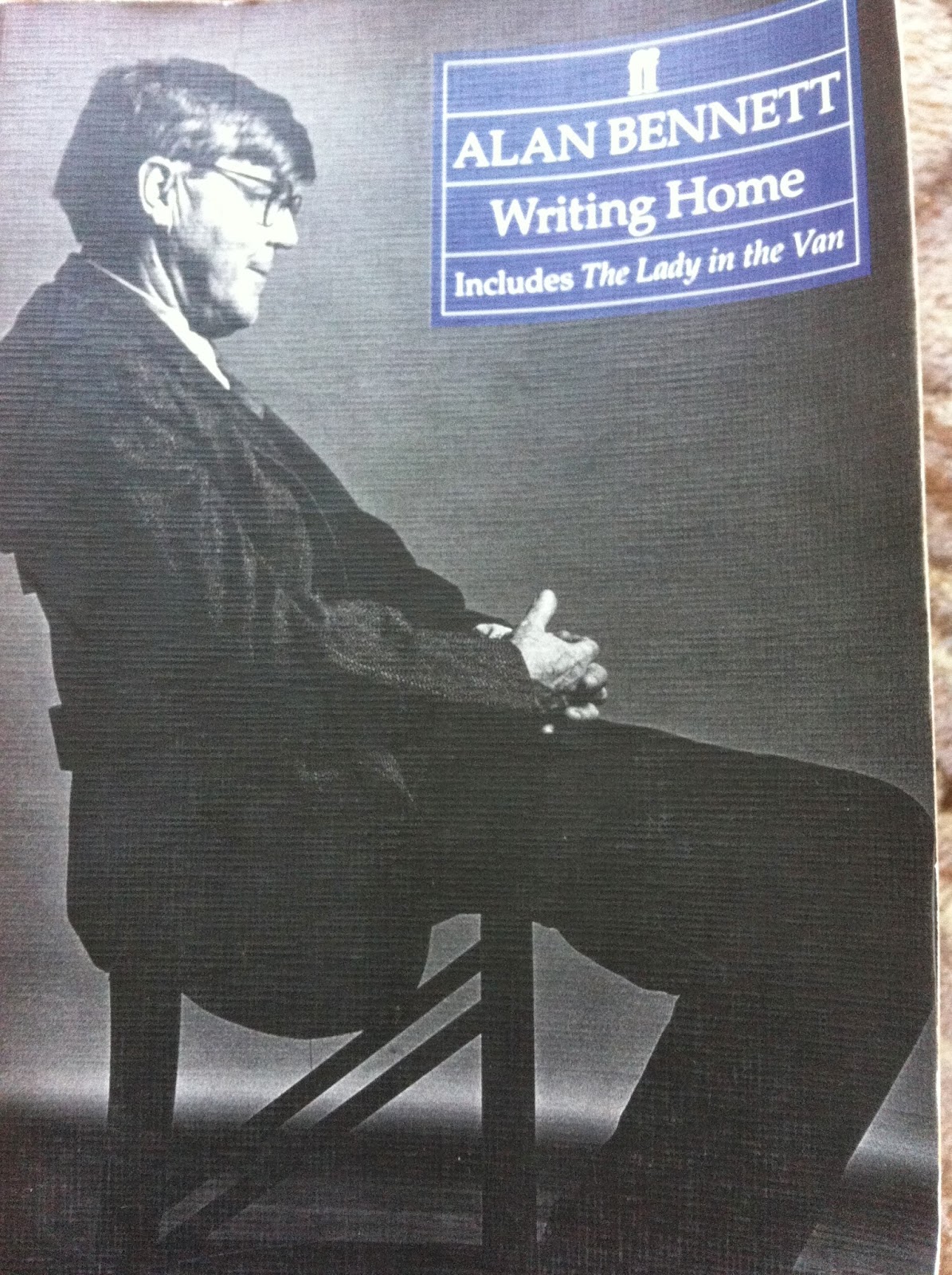
Alan Bennett:
'When I come back from
filming - emerge, as Goffman would say, from an intense and prolonged period of
social interaction - I feel raw, as if I have in some unspecified way made a
fool of myself.' (Filming and Rehearsing, 18 March 1978)
Novels: I've just read Hannah Kent's Burial Rites.
What a joy - an old-fashioned novel, with characters you care about and puzzle
over, a plot with layers that you never quite know if you're going to
understand, and a landscape that I feel I've lived in, so embedded was it in
the story. Kent pulled me into 19th century Iceland so entirely that I emerged
blinking at the end as if I too had spent a year in the darkness of a turf
hut with Agnes. Awesome.
And here's the perfect
novel for when you're beginning to feel better, so you can read for several
hours without falling asleep. Philip Hensher's The Northern Clemency is the
huge (738 pages) story of two families in Sheffield over several decades. It
has rich characters, a delightful fondness for suburbia in the 70s and 80s, and
a wry humour. Here's a joyful snippet from a scene in a supermarket:
'The Tannoy announced a
good deal for today only in Gateway, ten pence in the pound off beef mince; a
voice so weary with tragedy, it might have presided over the fall and decay of
a thousand cities, each of them reducing beef mince by ten pence in the pound
as its walls fell.'
Finally, I'd just like to
say that Middlemarch is a rubbish book to read when you're ill. I read
it recently, because I felt I should, and because I'd given up on it once
before. I don't like giving up on books, so I persevered. And when I reached
the end I realised that I had read it all the way through before, but had
forgotten the whole thing. First time, I was ill with ME, and read it in a
brain-dazed state. So now I've read it twice, and don't need to read it again.
So there.
Friday, 31 January 2014
Why I keep all my theatre programmes

In my office, I have boxes of programmes - I buy one every time I go to the theatre or an event, and have never thrown any away.
In these boxes are some of the first plays and films I saw as a child
(The same local panto has been running for at least thirty years and I've been most years. The jokes haven't changed, and it's one of the most immersive theatre experiences I've ever been part of.)
and some that still send shivers down my spine years later
(Willard White's deep, beautiful, ravaged bass voice and the fateful lines, 'Put out the light, and then put out the light' - no one else has ever made me weep so much in this scene.)

or which I've seen many times
(Because the play transformed my understanding of what a writer could say about the meaning of life in two short acts where nothing happens, but everything does.)
as well as some more nights that I can't believe I'll ever forget(because they were simply breathtaking and exhilarating
or because the writer had created some something truly surprising and beautiful).
Despite my heap of programmes, I quickly forget when I saw a play or a film, and often retain only a vague impression of it, or perhaps a single scene or image.
So to jog my memory, I thought I'd list the plays and films I see on my blog, starting now. Then I thought, why stop there? There's often a strange communication between the books, films, plays and galleries I spend time in, so I'm going to keep a record of all of them.
A key to the images above
The pantomime, every year, the Royal Vic in Southborough
Othello, 1989, Young Vic
Waiting for Godot, 1997, Old Vic
Jerusalem, Royal Court, 2011 (photo, Royal Court website)
London Road, National Theatre, 2011 (photo by Mark Douet)
Tuesday, 10 December 2013
Retreating to Brisons Veor
Last week I turned away from my world for seven days. For the first time in my life, I took myself from family, home and work purely with the aim of writing. I was allowed to stay at Brisons Veor, a house perched on the very tip of Cape Cornwall, where writers and artists can spend time alone or in small groups. I went alone, and it was wonderful.
It was strange, too. Thirty years ago I lived alone for one year in France and since then I've always lived with other people. At Brisons Veor in December there is no one else around after dark: the coast watchers from the lookout post drove away at 4.00 pm, and the sun set at 4.30, and all I could see from my windows was the red light flashing off Land's End. All I could hear was the waves below, rushing up the rocks and into the cove.
It felt very empty.
But after a few days, it felt right. Each day I walked on the cliffs, I thought, I ate cake, and I let the ideas which have been piling up in the corners of my mind for years come together.
I've wanted to write a long story for a long time. I've had plot, characters, situation and setting jigging about in my mind, all disconnected and jumping out of reach in the short moments I've had to try and pull them towards me.
This week they came together. It will take me months or maybe years to write them into being, but I've started, and I'm very happy.
Thank you Brisons Veor. I hope I'll be back.
Saturday, 2 November 2013
On Harrison Stickle I lifted up mine eyes
A couple of weeks ago, we sat on Harrison Stickle and looked out across the Langdale valley towards the south. Beyond the fells of the Lake District we could see a glimmer of sea at Morecambe. It was my birthday, my fiftieth birthday, and it was the right place to be.
I've been climbing the Langdale Pikes since I was a teenager with my parents and brother. I returned with university friends the week after our finals. My husband and I have climbed them many times, before and after we were married, and then we brought our children.
So here we were again, sitting in a gap in the clouds, without children for the first time in 20 years, eating egg sandwiches, and feeling the wind on our backs, full of rain that would, wonderfully, twist past us and on to the heights of Bow Fell, leaving us in warm October sunshine.
Nothing has changed, though of course much has changed. The same something pulls me back to the fells time and again, and I'm not sure what it is. The getting up a hill is all sweat and aching muscles. There's no way round it. Why do I keep on climbing?
A few years ago we went pony-trekking in the Welsh borders. Just over the road from the stables was a chapel, and inside we found a beautiful window through which we could see a green hillside, and inscribed on it words from Psalm 121: I shall lift up mine eyes to the hills whence cometh my salvation. We had stumbled upon Capel-y-Ffin, where Eric Gill had lived and worked, and on his celebration of the power of the hills to restore.
Gill and God had a complicated relationship, and God and I don't have one, but I know what he meant.
Monday, 30 September 2013
Small Wonder 2013
If you've never been to Small Wonder, the annual short story festival at Charleston in Sussex, here are some tips:
Save up. You'll definitely want to buy at least one book. Where else are there hundreds of amazing short story collections waiting just for you?
Wear woolly socks. The barn is charming, atmospheric, and chilly once the sun drops below the South Downs.
Expect to lie awake when you get home. Your mind will buzz with the stories you've heard, and the ideas that have leapt into your notebook.
Remember your notebook.
In mine, I've written lots of things that I'll keep to myself for now, but also: Alison Moore says that home is often a dangerous place, and that her short stories are about 'little fractures'. Brian Kimberling - who's lived in all sorts of places and is about to head home to Indiana - says that people who don't have mixed feelings about home aren't paying much attention. Deborah Levy says that there are lots of missing pages in the stories we tell about ourselves and they're probably the most interesting. She likes to read Freud and Agatha Christie, especially the stories where the clues are clunky.
The picture, by the way, is from one of the incredibly comfortable Small Wonder sofas. My Mum's next to me, and it's thanks to her and my Dad that I've been going to the festival for years, as they cleverly spotted that it's my perfect birthday present. Thank you!
Sunday, 22 September 2013
On the road
Clients often ask me to visit the people and places I'm writing about, and I love getting to know my subjects face to face, but the travelling has some downsides - in the last few weeks I've drunk a lot of tea in paper cups, left hotels at dawn far too often, and watched numbly as landscapes flash past train windows.
There are new story ideas sizzling gently, but no time to write them, nor this blog. I'll be back!
Subscribe to:
Posts (Atom)